

We posted our first blog when we rebranded and then… crickets. But as the saying goes—better late than never!
As coaches and runners (ourselves included), we see the struggles so many runners face. Our goal with this blog is to share personal experiences, best practices, and the occasional opinion piece.
So we’re kicking things off with a blog all about fueling.
I (Andie) struggled with fueling for a large part of my running career, and it impacted me more and more as I got older. I didn’t think of food as something that made me stronger and helped me recover—I thought about it in terms of how it made me look. As a result, I underfueled and suffered from RED-S (Relative Energy Deficiency in Sport).
RED-S is a relatively new term, but the concept has been around for a long time. It used to be known as the Female Athlete Triad. The name changed because relative energy deficiency doesn’t just affect females—males can suffer from it too, they just don’t have the same warning signs.
As a young athlete, I knew nothing about this. I didn’t understand how fueling or the timing of fueling impacted my hormones and recovery. Now I do, and that’s why I’m here—sharing this.
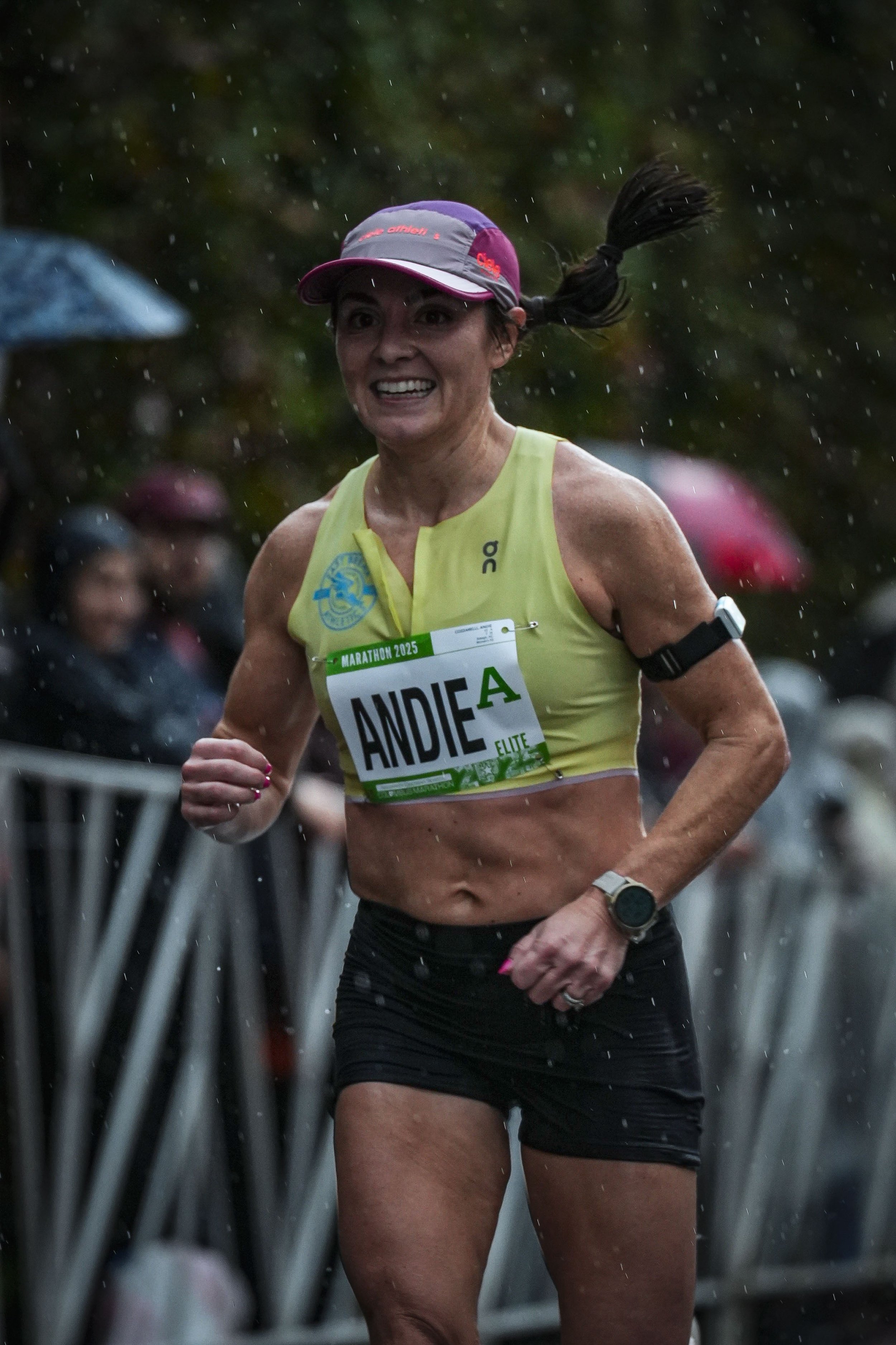
I recently ran the Columbus Marathon, and although it wasn’t a PR, it was by far the best marathon I’ve ever run. Part of that was training smarter and pacing better, but more than anything, I fueled better.
Was there room for growth in my fueling during the highest weeks of training? Absolutely. Looking back, there were times when I wasn’t getting enough, and that’s something I’ll continue to work on. Hunger cues alone aren’t always enough to tell us what we need. Running—especially running hard—can blunt hunger, which is why you may not feel hungry after a tough workout. Even so, it’s essential to eat and hydrate.
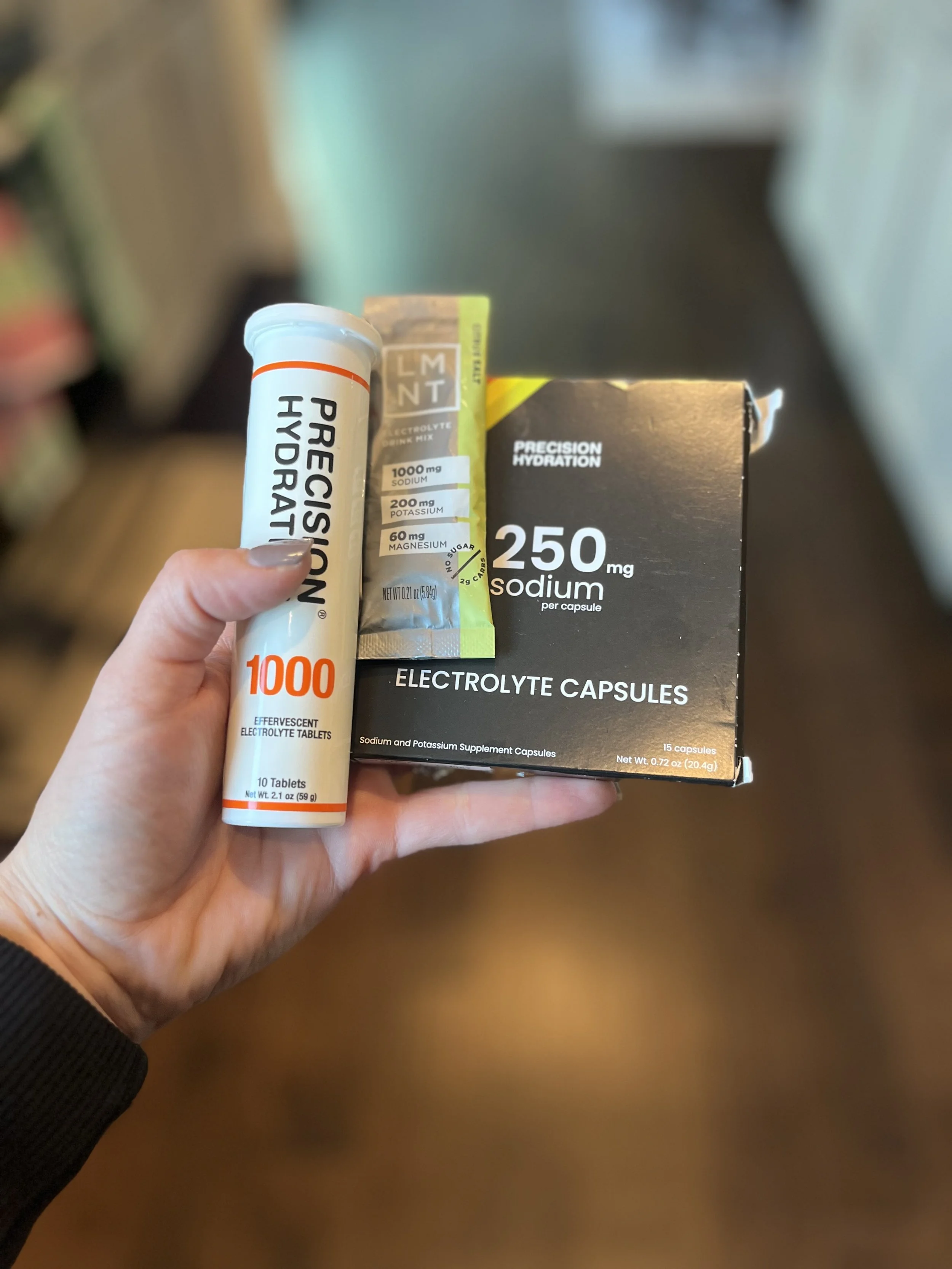
Speaking of hydration: after runs, especially hot ones, the body’s primary goal is to rehydrate. Neglecting this can slow recovery. Even if you eat well after a run, failing to replace fluids and electrolytes can impair recovery. I also learned this training block that I’m a salty sweater, so this is especially important for me. My recovery suffers significantly if I don’t replace sodium.
I’m not a dietitian, so I can’t give personalized recommendations—but these were the guidelines I received for ME from sports dietitian Kylee Van Horn of FlyNutrition.
As a 5’0” ~115-lb runner aiming to run under three hours, my targets were:
Fuel during: 75 g of carbohydrates per hour (minimum of 60 g/hr if GI distress occurred)
Hydration during: 650 mg of sodium per hour and 20–24 oz of fluid per hour in ~60°F with no sun, rain, or wind
(I later learned I likely needed closer to 1,000 mg of sodium per hour—I’m a very salty sweater.)Carbo-loading: 7 g of carbohydrate per kg of body weight for the three days leading up to race day
For pre-race fueling, I had a bagel with peanut butter and iced coffee three hours before the race. On the way to the start, I drank a packet of UCAN (the energy mix, not the gel) mixed with a scoop of Gnarly pre-workout and 5 g of creatine. I finished this about 45–60 minutes before the race, which gave me roughly 80 g of carbs to top off glycogen stores.
A three-day carb load can improve performance by about 2–3%. For a four-hour marathoner, that’s roughly 5–7 minutes! I practiced this before my last long run to get a feel for it and to practice with foods I would use prior to race day. One tip: don’t forget liquid carbs. Juice can be an easy way to hit carb targets without as much bloating.
I’m sharing all of this simply to show what I did. These were recommendations based on working with a sports dietitian who helped determine my personal targets. If you struggle in the final 10K of a marathon, I highly recommend seeing a dietitian. Fueling—especially hydration—is highly individualized and takes precision, trial and error, and practice at marathon pace.
Columbus was by far the best marathon I’ve ever run, and better fueling in training, during the race, and through carb loading made a huge difference. I didn’t want months of hard work to be wasted because I neglected my fueling. Training is only half the battle.
Knowing how much to push in training and how to pace on race day matters—but so does fueling. We need both to succeed.