
What happens when you no longer remember your why? You lose sight of your north star, and the morning miles and weekend long runs become work, not pleasure. How do we go back in time to remember why we started this journey in the first place?
For over two decades, running has been my constant. What started as a recreational hobby in college slowly intertwined itself with my identity. Running is not something I do. It’s a part of who I am. Over time, however, running has started running me. For years, I have been on the treadmill of more races, faster times, and higher mileage. Like an addict, I needed more to fill a void I didn’t know existed. Once I learned I could run fast, I wanted to go faster, dismissing that 18-year-old who happily ran two miles every other day. Slowly, over the past two years, I’ve tried to create space between my love of the sport and the need to prove something. But like the bad habit you can’t quite quit, I kept signing up for one more race, doing one more workout, and trying one last time for a PR. I have lost sight of my why.
Running came into my life as a way to help make sense of the world around me. As a young college student, life was full of new challenges and new opportunities. I didn’t know where I fit in, but I did know I needed discipline. As a freshman who tried the party scene and decided it wasn’t for me, I found the beauty of early mornings. While everyone else slept in, I learned that if you ran at 6:00 a.m., you could have breakfast by 7:00 a.m. and be ready for class by 8:00 a.m. That feeling of accomplishment was something I came to crave, and my love for early mornings has only grown. During those first few years of running, I was content to run 2–3 miles a few times a week. Then one day, I turned my three-mile loop into six miles, and after buying my first pair of real running shoes, I turned that loop into nine miles. This was before the time of GPS and Garmin watches, which meant I never knew my pace or exact mileage. I only knew I was doing something I never thought I could do—and that is an addictive feeling.
As the years went on, I entered the world of endurance running. I ran my first half marathon in 2004 in a time of 2:20. Then, in 2005, I ran two marathons, with my fastest time being 3:56. After my second marathon, I promised myself I would get back into dancing or pick up a different hobby. But marathons don’t go quietly. I started chasing the coveted BQ time, which back then was 3:40:XX for my age group. Injuries plagued me for years, but in 2010 I crossed the finish line of the Philadelphia Marathon in 3:40:00 with what I’m pretty sure was bronchitis. That November morning, I knew that if I could run a BQ after being constantly injured and with bronchitis, I could run faster. From there, times dropped, life happened, hips were broken (yes, I now run with a metal implant in my left hip), babies were born, and COVID halted the world. It was a decade of messy running—one where I always felt like I fell short of my potential. Then something shifted. I hired a coach, found one of my best friends and training partners, and got serious. Very serious. After running a one-off 20K put on by Sir Walter Running in April 2021 in a time of 1:20:38, I knew a sub-3 marathon was a very real possibility—and I’ve been chasing faster times ever since.
The first time I attempted a sub-3 marathon, I fell gloriously short by nine seconds. In November 2021, I finished the Richmond Marathon in 3:00:08—a 14-minute PR and nine seconds off my goal. As disappointing as I was in that moment, it was also the most empowered I had ever felt. I went after something I thought was impossible, and although I didn’t achieve my goal, I was so close. It was as if the nine seconds didn’t even matter, which left me wondering: what other impossibles are waiting for us on the other side of hard work and belief? I spent the entire ride back to Raleigh the following day daydreaming about all the things I could accomplish if I just put in the work. But the hamster wheel of fast times kept moving, and my ego hasn’t let it slow down since.
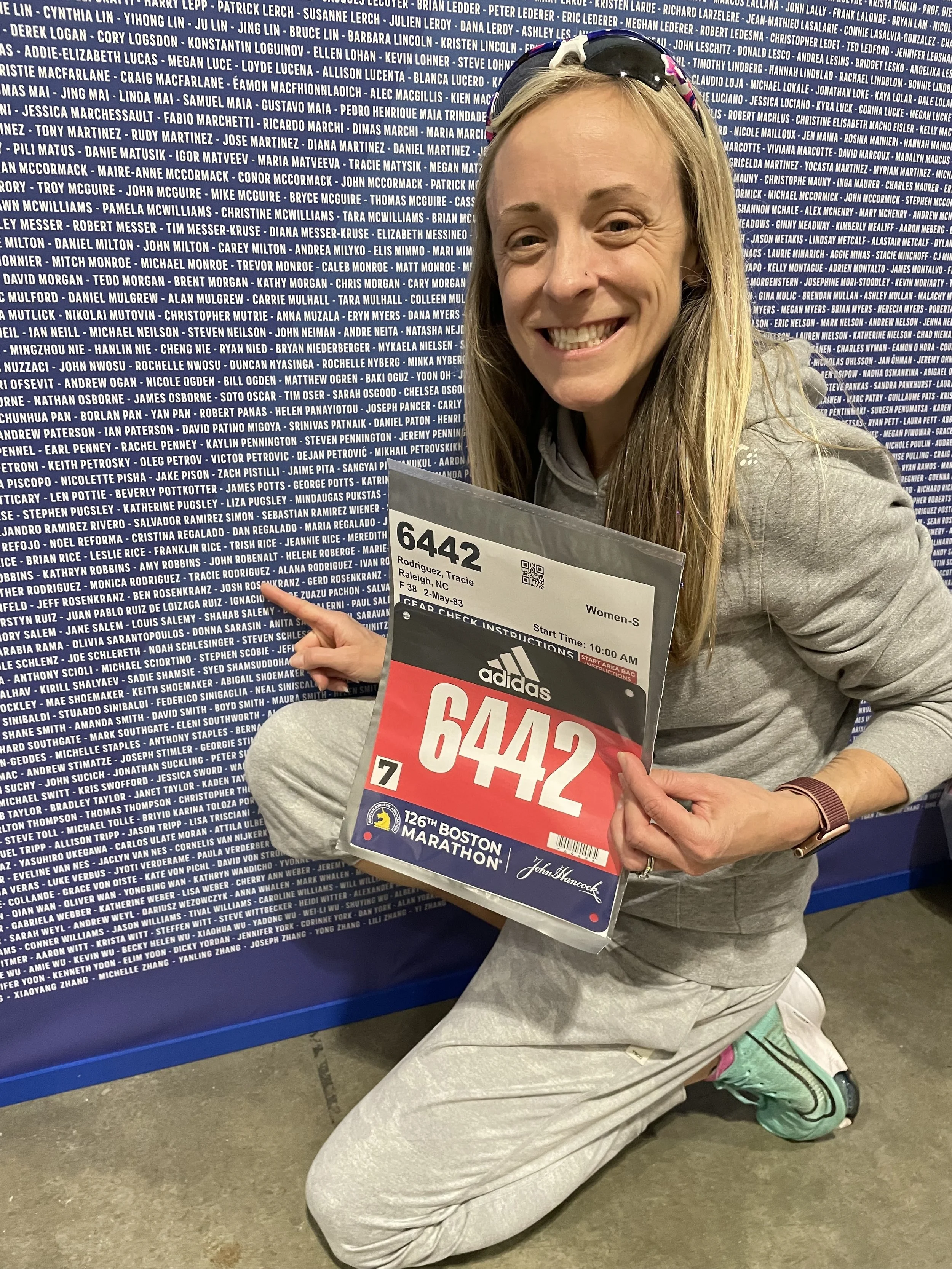
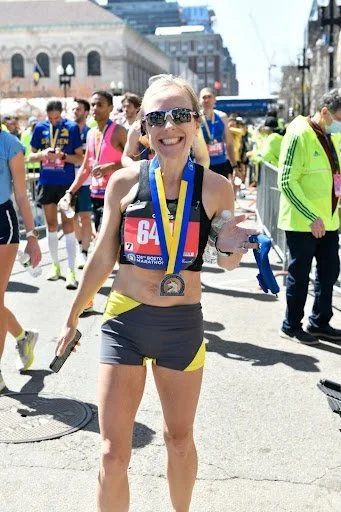
My sub-3 dream became a reality five months later in Boston. After focusing on the half marathon for the first part of the year, I had no goals for Marathon Monday—only to enjoy the moment and do what felt right. Rare is it that we have a race where everything clicks and you feel like you could run forever. I experienced that luck in April 2022, and when I crossed the finish line in 2:58:30, I couldn’t believe it was over. It was one of my proudest moments in life because as I congratulated other runners, I knew all of my hard work leading up to that point had made my dream a reality. It was the best feeling—but feelings are fleeting.
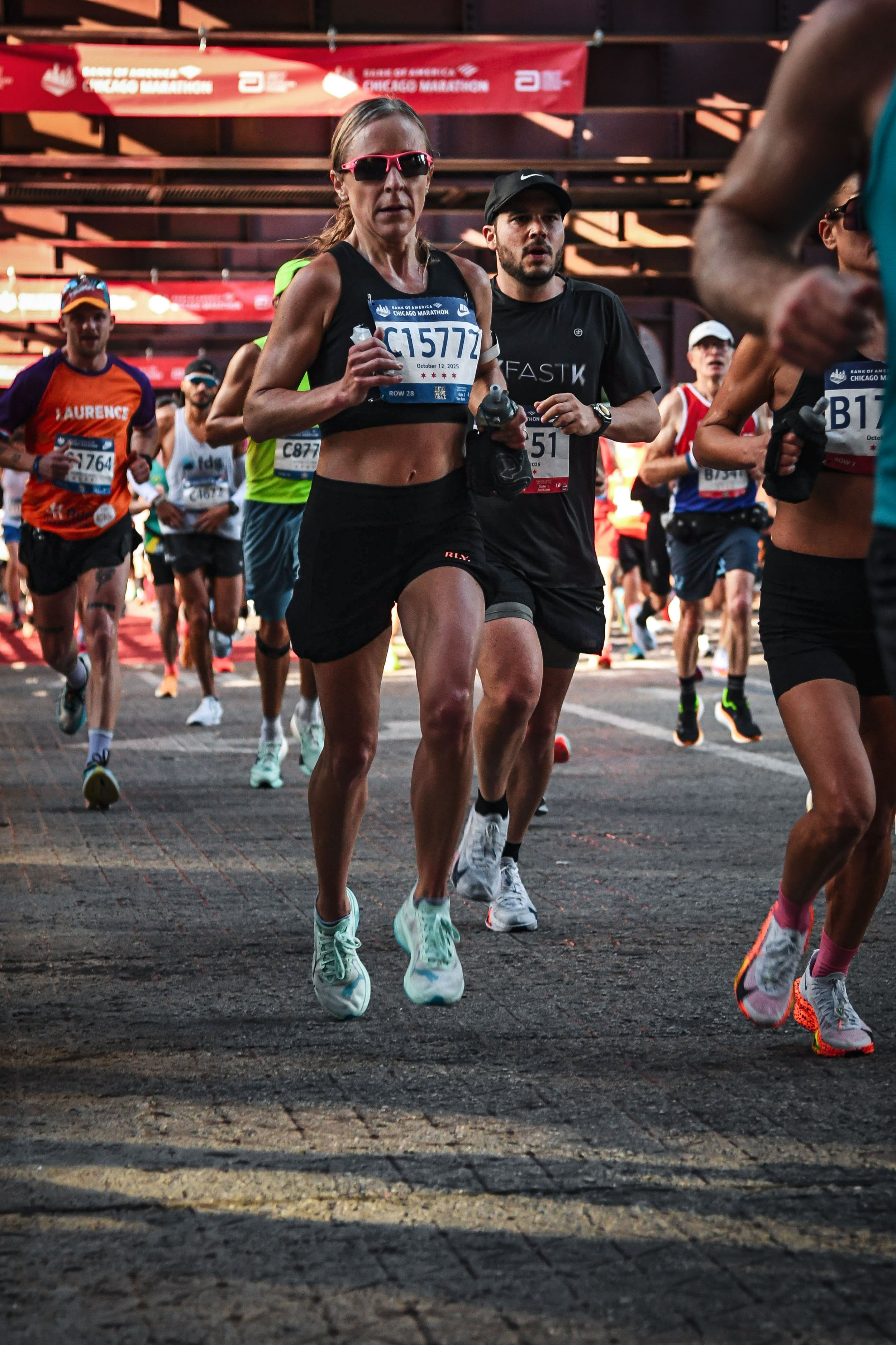
For several years after my first sub-3 marathon, I kept chasing. And for a while, it was good. I saw what could happen when you embraced discipline—when you chose action over motivation—and finishing times I’d once labeled “impossible” became the norm. But somewhere along the way, I forgot why I started. It was no longer about turning the impossible into reality. The training became driven by ego, and it stopped being fun.
We’ve all heard that people learn from their failures, but we rarely talk about what success teaches us—or how it can quietly change us. For so long, I felt like I failed at running, coming up short at finish line after finish line. And then one day, I did it. I succeeded far beyond my wildest expectations. It was a feeling I never want to forget… and yet it was gone in an instant.
I kept believing I could find that feeling again on the other side of another finish line. But it isn’t there anymore. So maybe the answer isn’t another race. Maybe it’s another arena. I need something new to risk, something new to be bad at, something new to fail at—and grow through. And running, instead of being the thing I chase, can be the foundation that helps me get there.
I love running. I love that feeling of flying through space on my own two feet. I love the morning sunrise, witnessing the changing of the seasons day after day—the uncomfortable elements of summer days and January mornings. When nothing else goes right, I know that if I simply lace up and head out, it will all make a bit more sense a few miles later. Over time, I have forgotten these things. Over time, I settled for finishing places and new PRs. But that isn’t why I run. I run because by showing up day after day—no matter how badly I want to sleep in or stay warm—I am reminded that I can, in fact, do hard things.

I started running to discover who I am. At some point, I decided that’s all I was. But that’s not true. There was a time in my life when I needed the hard workouts and fast races. They allowed me to change the story I told myself. And after thousands of miles, I’m right back where I started—but I have a different story. No longer am I the 8-year-old girl who believes the Presidential Fitness Test is the worst thing on Earth, or the 14-year-old who believes she should stay out of the sports lane. Through decades of running—sometimes slow, sometimes a bit faster—I know my impossible is only a matter of changing perspective and a lot of hard work. I look back at that 18-year-old girl who went out for a jog down Hillsborough Street and turned around half a mile later, and I’m so proud of her. She gave herself a chance, and because of that, this 42-year-old is still dreaming up new ideas.
I no longer run for fast times. Instead, running is how I discover all the possibilities within this world and within myself. I run to know myself.
Why do you run?
PS - we did an instagram live to chat more about each of our why’s. Click here for the replay!